February 6th, 2018
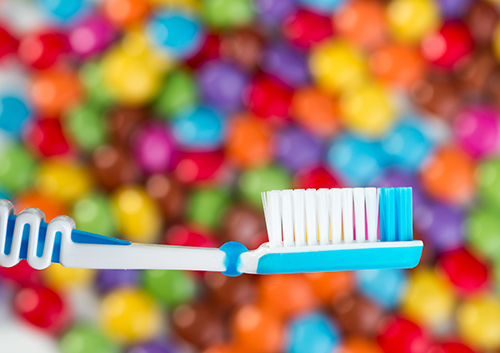
Oral hygiene has always been an important part of maintaining overall health. For thousands of years, humans have found ways to keep their teeth and mouths clean. According to the American Dental Association (ADA), “early forms of the toothbrush have existed for nearly 5,000 years.” But what exactly did the first toothbrush look like?
Toothbrush Timeline
With help from The Library of Congress, Dr. Carl Meyers and our team have compiled a timeline with some interesting details about the evolution of the toothbrush:
- 3000 BC – Perhaps the earliest form of the toothbrush, the “chew stick” was used by Ancient civilizations. People would rub this thin twig with a frayed end against their teeth to remove food and plaque.
- 1498 – The bristle toothbrush was invented in China and had many similarities to the toothbrushes used today. These devices were made by attaching the stiff, coarse hairs from the back of a hog’s neck to handles that were typically made from bone or bamboo.
- 1938 – Signaling the end of the boar bristle, Dupont de Nemours introduced nylon bristles, and Americans welcomed Doctor West’s Miracle Toothbrush, the first nylon toothbrush.
- 1960 – The Squibb Company introduced Broxodent, one of the first electric toothbrushes, to the American market.
Toothbrushes Today
Today, there are many brands of toothbrushes that often advertise different benefits. The variety of options may seem overwhelming, but the most important thing is for you to find a toothbrush that you like and find easy to use.
The ADA recommends that you choose a toothbrush that fits comfortably and allows you to effectively reach all areas of your mouth. Whether you decide to use a manual or a powered toothbrush, make sure that you thoroughly clean all surfaces of your teeth twice a day.
Society has come a long way since the days of the chew stick, but one thing that remains the same is the importance of consistent and effective personal oral hygiene.
January 30th, 2018

Unless you're aware of the signs and symptoms of gum disease and how it's caused, it's possible that you may have unknowingly developed it. Often painless, gum disease -- or periodontal disease -- becomes progressively more serious when left untreated. As you learn more about the common causes of gum disease, you'll be better-equipped to maintain the best oral health possible.
Gingivitis & Periodontitis: Common Causes of Gum Disease
- Bacteria & Plaque. Bacteria in the mouth creates a sticky film over the teeth. Good hygiene practices help remove the bacteria and the plaque they cause. When plaque is not removed, it develops into a rock-like substance called tartar. This can only be removed by a dental professional.
- Smoking & Tobacco. If you're a smoker or use tobacco, you face a higher risk of developing gum disease. Additionally, tobacco use can lead to stained teeth, bad breath, and an increased risk of oral cancers.
- Certain Medications. Some medications that are taken for other health conditions can increase a person's risk of developing gum disease. If you take steroids, anti-epilepsy drugs, certain cancer therapy medications, or oral contraceptives, speak to Dr. Carl Meyers about how to maintain healthy gums.
- Medical Conditions. Certain medical conditions can impact the health of your gums. For instance, diabetics face an increased risk of gum disease due to the inflammatory chemicals present in their bodies. Always talk to our team about other health conditions to ensure we take that into account when treating you.
Take a Proactive Stance
Good oral hygiene practices and regular visits to our West Bend, WI office can help you eliminate or reduce the risks of developing gum disease. A thorough cleaning with your toothbrush and dental floss should take about three to five minutes. Brush your teeth a minimum of twice per day and floss at least once each day. Keep these tips in mind and you’ll be ready to prevent gum disease.
January 23rd, 2018

If your teeth don't line up like they used to any more, you may be suffering from temporomandibular joint disorder, often called TMD. This is a term that can actually be applied to any condition that occurs because the temporomandibular joint (TMJ) is inflamed.
The temporomandibular joint is essentially the hinge that holds your lower jaw to your skull, and when it is inflamed or damaged in any way, it can be extremely painful. You have two temporomandibular joint, one on each side of your jaw, and it is typical to experience TMD in both sides at the same time.
Shifting of the Teeth
The reason that your teeth may not line up as they once did is that the ball and socket joints are often out of alignment and, as mentioned above, often very inflamed as a result. In order to correct the problem, Dr. Carl Meyers may prescribe dental orthotics such as a lower jaw splint.
Sometimes, the wisdom teeth can play a role in the shifting of the teeth as well. If shifting wisdom teeth is combined with TMD, it may be necessary to have your wisdom teeth removed. Dental splints may follow if your teeth don't shift back to their proper positions on their own.
TMD is certainly a difficult thing to deal with, so if you experience your teeth shifting, scheduling an appointment at our West Bend, WI office is the smartest course. We want to help you get your smile back, so give us a call anytime.
January 16th, 2018

Many patients at Pioneer Dental are under the impression that harder brushing leads to cleaner teeth, but that is not true. Gentle brushing is just as effective, and less likely to cause damage. Other good brushing habits include brushing your teeth at least twice a day, replacing your toothbrush after a few months, and brushing for at least two minutes each time. It can be tough to keep track of the time when you are aiming for two minutes, but these tips can help.
Set a Timer
Setting a timer is a sure-fire way to hit your two-minute goal on the dot. Leave a kitchen timer in your bathroom so that it is easy to set each time you start brushing your teeth. Hit each surface of all of your top and bottom teeth, and keep brushing until the timer rings. Many electric toothbrushes have a built-in timer that you can use instead of a kitchen timer.
Entertain Yourself for Two Minutes
Time flies when you are having fun, and you can stay entertained as you brush your teeth for two minutes. These are some ideas.
- Time your favorite song and sing it in your head as you brush your teeth.
- Find a two-minute video on the Internet that you want to watch, and start it when you begin to brush your teeth.
- Do squats in the bathroom as you brush. Go down for three slow counts, and up for three slow counts. By the time you get to 20 squats, your two minutes will be over.
Let Your Children Use Technology
Toothsavers is an app designed to inspire children to brush. The app was developed and released by the Ad Council and the Partnership for Healthy Mouths, Healthy Lives. It includes:
- A game to fight an evil sorceress who causes cavities
- A two-player version that lets children interact with friends and parents
- Real-life reminders to brush twice a day
- A built-in timer that helps kids brush for two minutes